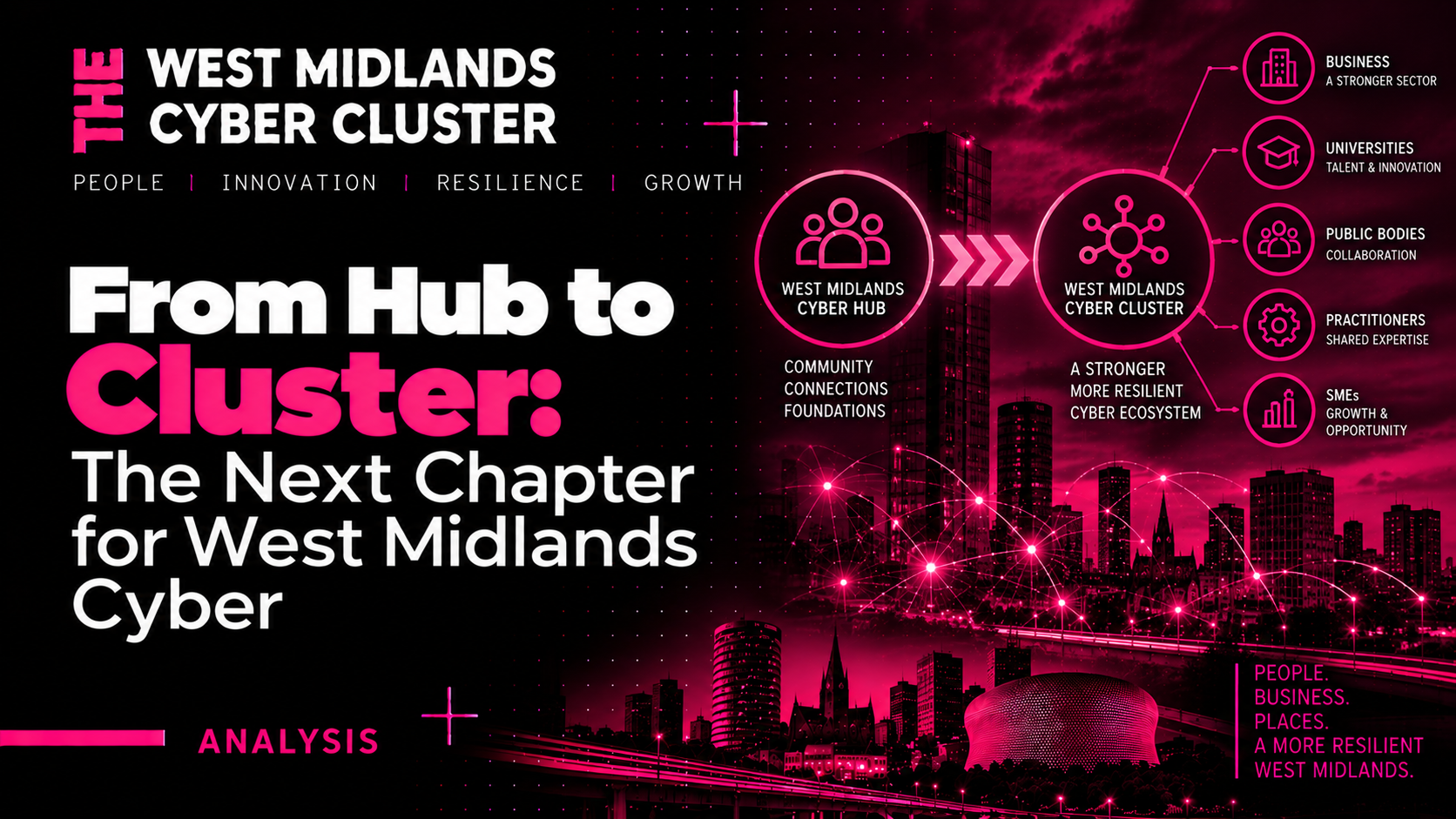
The West Midlands cyber community is entering its next phase. Building on the foundations established by the West Midlands Cyber Hub, the Cluster will strengthen connections among cyber companies, industry, universities, public bodies, and practitioners across the region.
Advanced manufacturing increasingly depends on connected operational systems, digital supply chains and AI-enabled processes. That makes cyber resilience an issue of productivity, continuity and competitiveness — not simply IT security.
The UK’s cyber sector is evolving beyond traditional security services towards a broader role in economic and industrial resilience. We examine the latest sector data and what regionalisation, productivity, and changing technology dependencies mean for the West Midlands.
From industrial resilience to workforce transformation, activity across the region demonstrates how cyber increasingly intersects with manufacturing, AI, skills, leadership and economic development.
Official cyber statistics capture different parts of the problem. Comparing survey data, regulatory reporting, and national incident data reveals a much larger layer of cyber exposure below what organisations detect and report.
Ten years of government cyber-security data reveal a mixed picture. Awareness has increased, but persistent attack methods and uneven organisational maturity suggest that exposure has become normalised rather than eliminated.
The latest UK data suggests stability in cyber incidents, but the headline masks persistent exposure, uneven detection and significant differences in organisational capability.
CYBERUK 2026 revealed a UK cyber system that is becoming more ambitious, interconnected, and demanding. We draw together five implications for businesses, cyber providers and regional ecosystems.
National cyber strategy ultimately has to be implemented by organisations. Regional clusters can provide the connective infrastructure between policy, providers, skills, research and businesses that need support.
As cyber assurance becomes increasingly important to procurement and supply-chain participation, organisations with mature security capabilities gain an economic advantage. What happens to SMEs that cannot keep pace?
AI, technological acceleration and geopolitical instability are changing the operating environment. Cyber fundamentals remain essential — but organisations differ dramatically in their ability to implement them.
UK cyber policy is moving beyond ecosystem-building towards active intervention in standards, supply chains and national resilience. What does that shift mean for businesses and cyber providers?
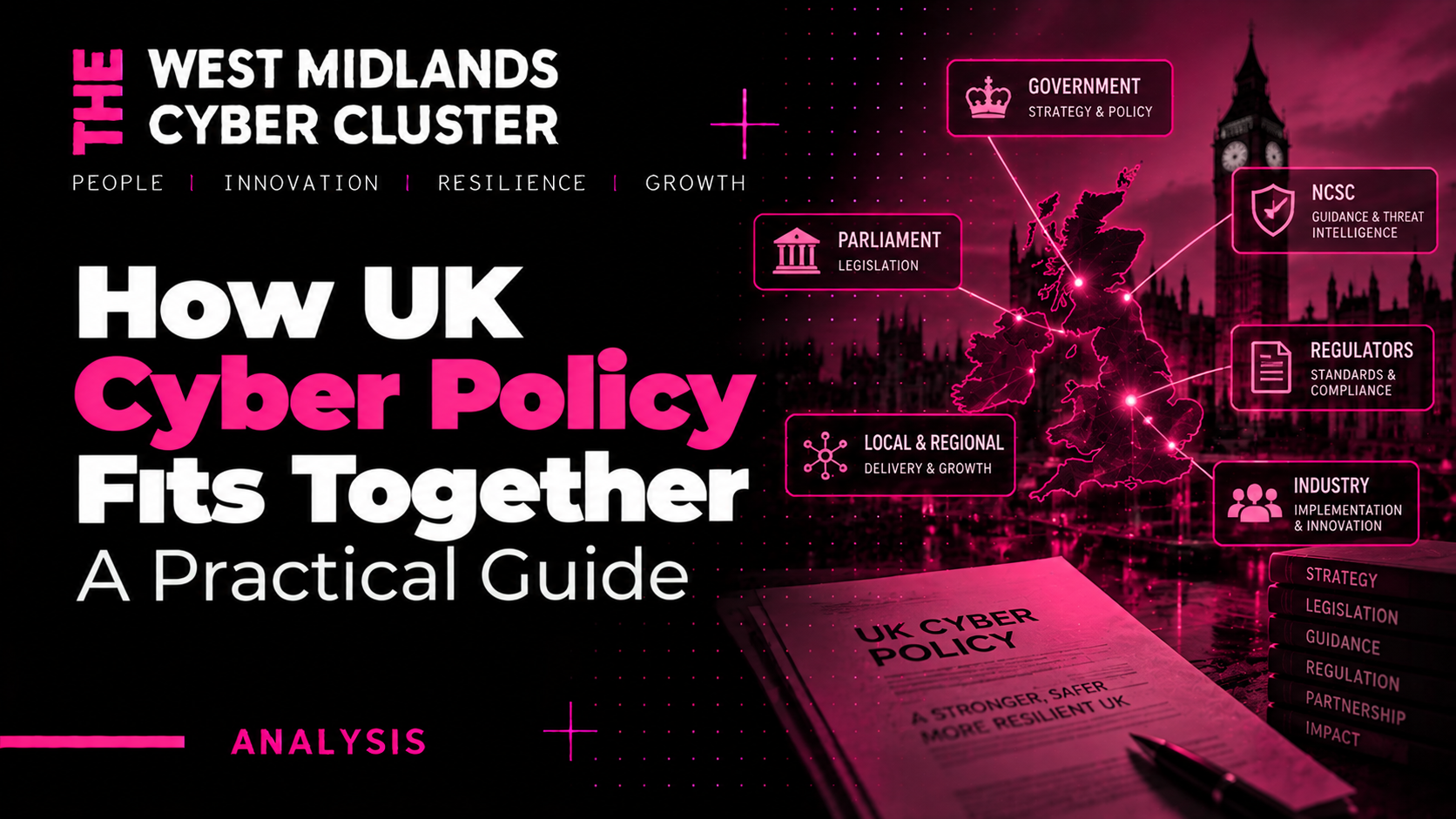
Strategies, legislation, regulators, NCSC programmes and economic policy overlap across the UK’s cyber landscape. This guide maps the major components and explains how they relate.
Deepfakes, sextortion and technology-facilitated abuse expose weaknesses spanning platforms, identity, safeguarding and enforcement. Addressing online harm requires interventions across the system rather than isolated technical controls.
Cyber Resilience Test Facilities have begun conducting product assessments. What does risk-based assurance mean for technology companies, buyers and critical supply chains?
Changes to the UK’s resilience regime extend obligations across data centres, managed service providers and critical suppliers. We examine the implications for organisations and their supply chains.
The Midlands has significant defence, aerospace, and advanced manufacturing capabilities. Ensuring cyber resilience is integrated into regional defence strategy will be critical to protecting increasingly interconnected supply chains.
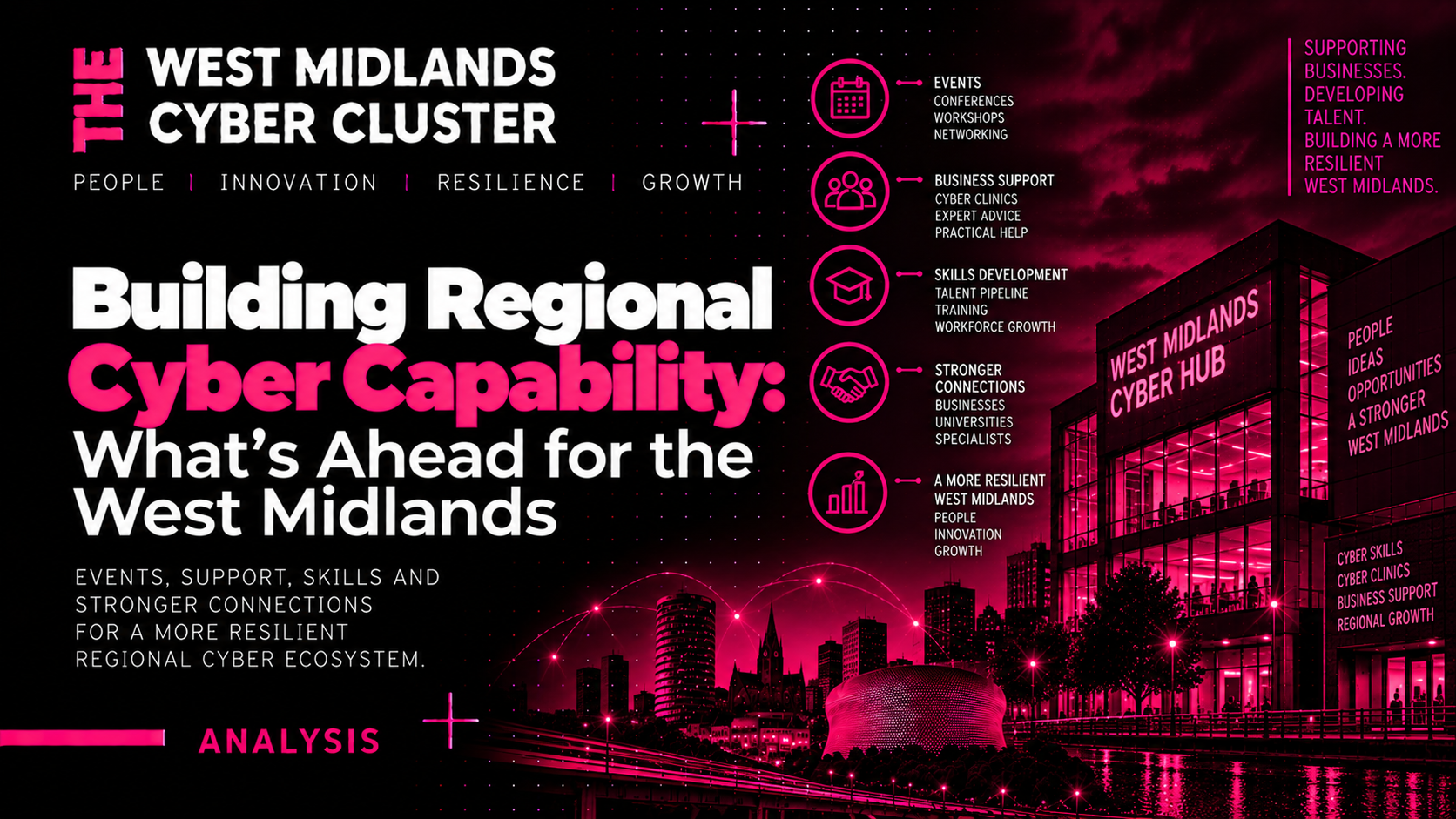
Events, practical cyber support, skills development and stronger connections between businesses and specialists are helping build regional cyber capability. We look at the programmes designed to support organisations across the West Midlands.
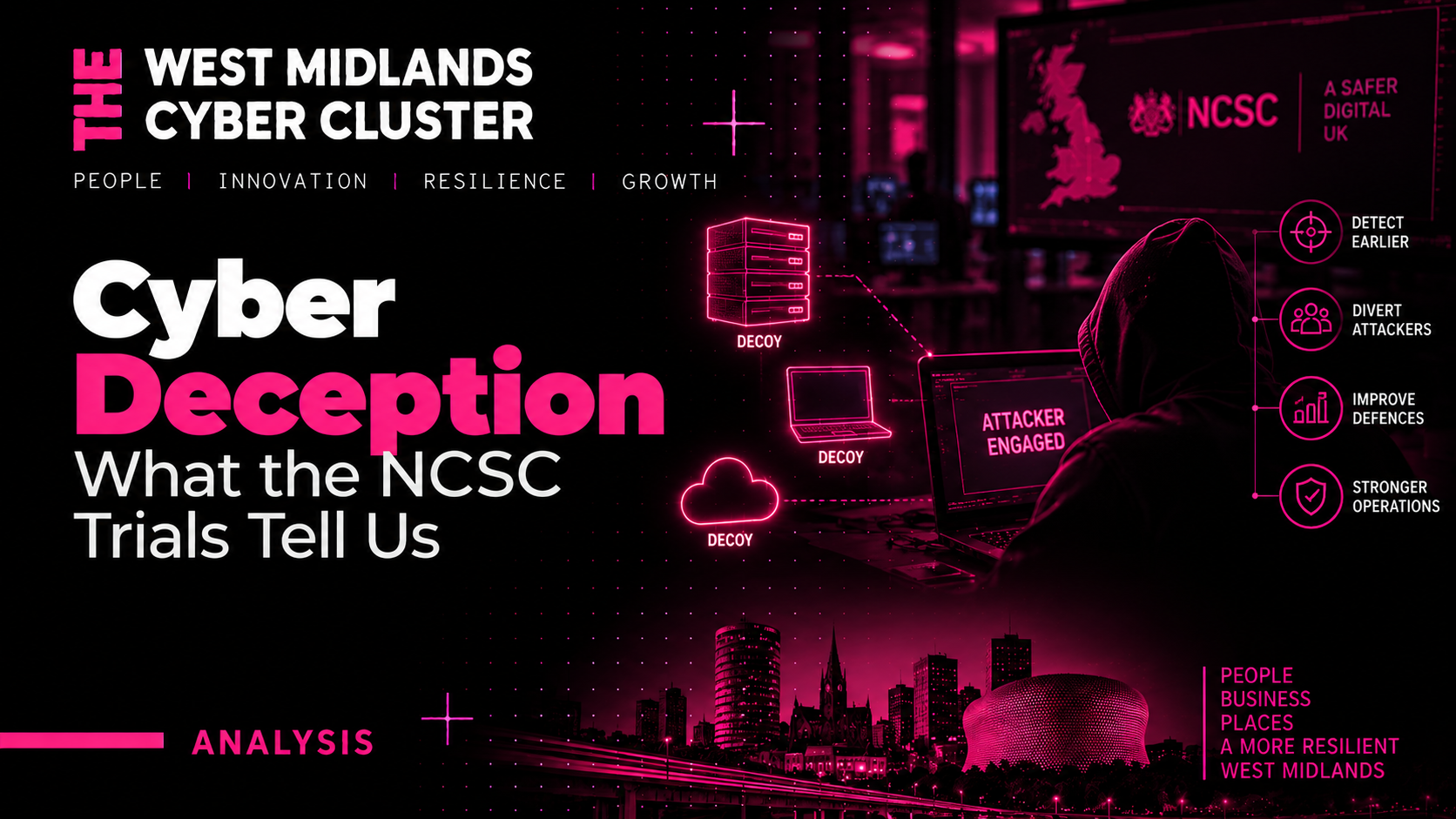
Deception technologies can expose attackers and improve detection, but they demand mature security operations. We examine where they can add value — and where expectations should be tempered.
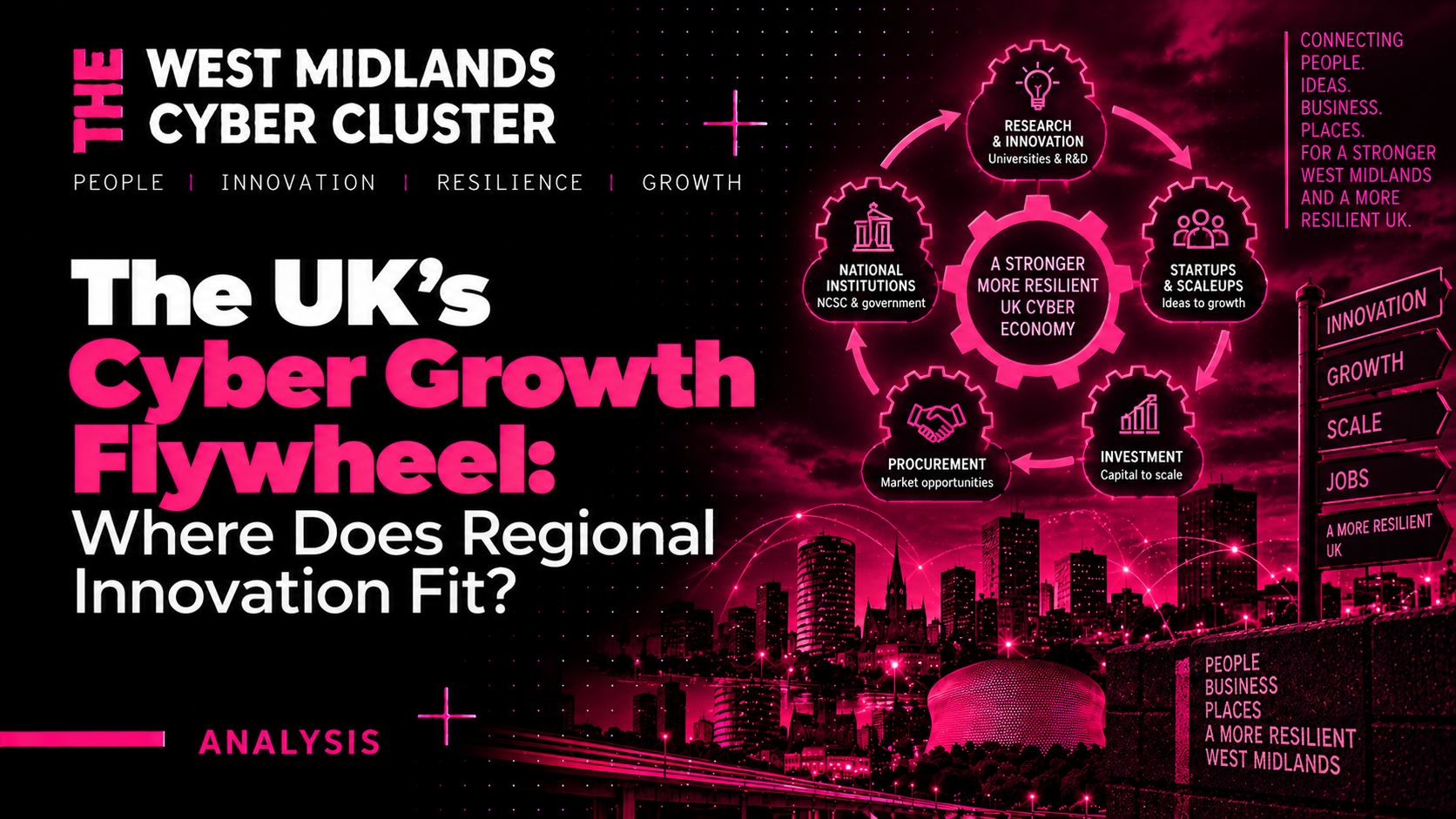
The UK has strong cyber research, national institutions, startups and established security companies. The challenge is connecting those assets into sustainable routes from innovation to commercial scale.